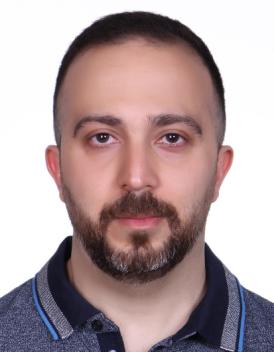
Pictured above: Reza Tavalla, PhD candidate at the University of A Coruña
In this interview, he reflects on his research, his time at Rennes 2, and the importance of European academic mobility for doctoral students.
Could you briefly introduce your doctoral research and its main theoretical contribution?
My doctoral project, supervised by Professor María José Arrojo at the University of A Coruña, examines how nationalist emotions among young people in Iran and Romania are shaped through their everyday interactions on social media. The project brings together communication theory, digital methods and comparative politics, with a strong focus on how political identities are formed online.
I have developed the theory of discursive–algorithmic coupling (DACT). The starting point is simple but crucial: we cannot meaningfully analyze what people say online without also examining how platforms algorithmically organize visibility. In other words, user discourse and platform algorithms evolve together.
DACT looks at this coupling across three layers:
- Infrastructures, such as access to platforms and connectivity conditions;
- Content, including the circulation of symbols, narratives and nationalist frames;
- Everyday interactions, such as likes, shares, comments and hashtag use.
This approach helps us understand when digital environments enable more plural and democratic identities, and when they instead push young users into narrower, polarized nationalist bubbles.
You are currently developing a new analytical tool called AIFI. What is it, and why is it relevant for Europe?
Building on DACT, I am currently working on a more operational tool called the Algorithmic Identity Formation Index (AIFI). The idea is to translate theory into something that can be empirically tested and potentially used beyond academia.
AIFI asks four core questions about an online exposure environment:
- How diverse are the political views users are exposed to?
- How often do they encounter opinions they disagree with?
- How strong are “us versus them” narratives in promoted content?
- And how present are emotions such as moralized anger or ressentiment?
By combining these dimensions, the index offers an overall picture of whether a given algorithmic environment is supporting inclusive, plural identities or reinforcing antagonistic and populist narratives.
Together with Prof. Arrojo, I hope AIFI can eventually function as a transparent and auditable metric for researchers, regulators and civil society actors in Europe—particularly those interested in encouraging pluralism-by-design in recommendation systems.
What motivated you to carry out a research stay at Rennes 2 and at CREAD?
I feel this is an excellent place to discuss the European dimension of my work—especially issues related to digital populism, European identity and the democratic role of platforms. Presenting DACT and AIFI here allows me to test whether ideas developed through an Iran–Romania comparison can also help explain current European debates.
Second, I was very keen to engage directly with colleagues and students at Rennes 2. Receiving detailed and critical feedback at this stage of my PhD is extremely valuable. This short stay has already helped me, and my supervisor Prof. Arrojo, to refine the theoretical framework, consider possible extensions—such as French or broader European cases—and think about future comparative research within the EMERGE network.
How did the collaboration with the CREAD research center begin?
From my side, the collaboration began thanks to Professor Lucy Bell. When my EMERGE research stay was being planned, she kindly reached out and suggested that my work on youth, digital media and populism would fit well with CREAD’s research interests.
After a short exchange of emails about my doctoral project and possible dates, she offered to host my visit and include my presentation in the center’s activities. I see this visit as the starting point of a longer-term relationship with CREAD, which I hope we can continue to develop through further exchanges and, ideally, joint projects within the EMERGE framework.
What role does EMERGE play in supporting doctoral research mobility?
EMERGE has been essential for making this visit possible. Beyond funding and administrative support, it provides something equally important: a shared academic space in which supervisors, departments and doctoral students see themselves as part of a common European community.
As a third-year PhD candidate in Documentation, Communication and Humanities at the University of A Coruña and a first-year student in the ARQUS Joint Master’s Programme in European Studies at the University of Granada, I experience first-hand how valuable this mobility is. It allows young researchers to move across institutional and national contexts, to compare cases on the ground, and to build collaborations that go beyond a single discipline or country.
For research topics such as digital populism, youth and nationalism—where cross-border dynamics are central—these short but intensive stays are incredibly enriching.
Reza Tavalla completed his Bachelor’s degree in American Studies and his Master’s degree in Language Studies for Intercultural Communication at Transilvania University of Brașov (Romania), both in English-taught programs. Alongside his doctoral research at the University of A Coruña, he is also a student in the ARQUS Joint Master’s Programme in European Studies. He is actively involved in the European communication research community, notably as an abstract reviewer for the 11th European Communication Conference (ECC 2026) organized under ECREA.